From test processing to the PDF report, without retyping your Excel workbooks
With the HeRMeS-XC 3D engine, you turn the classic descriptive identification of cohesive soils into predictive dynamics. You see the Water Gap, the Density Drop Potential and the Holistic CBR Surface in real time, to anticipate and manage with confidence the soil risks beneath your structures.
Designed for independent geotechnical engineers, laboratories and students in French-speaking Africa.
The problem
Formatting takes longer than the test itself
Today, in practice
- Excel workbooks copied from one project to the next.
- Curves redrawn by hand.
- A transcription error discovered only at the report stage.
- Formatting that takes longer than the test itself.
With HeRMeS-XC
- A single entry, reused by every test in the project.
- Automatic calculation and plotting, to the standards.
- A test must be validated before it enters the report.
- A complete, referenced PDF report in one click.
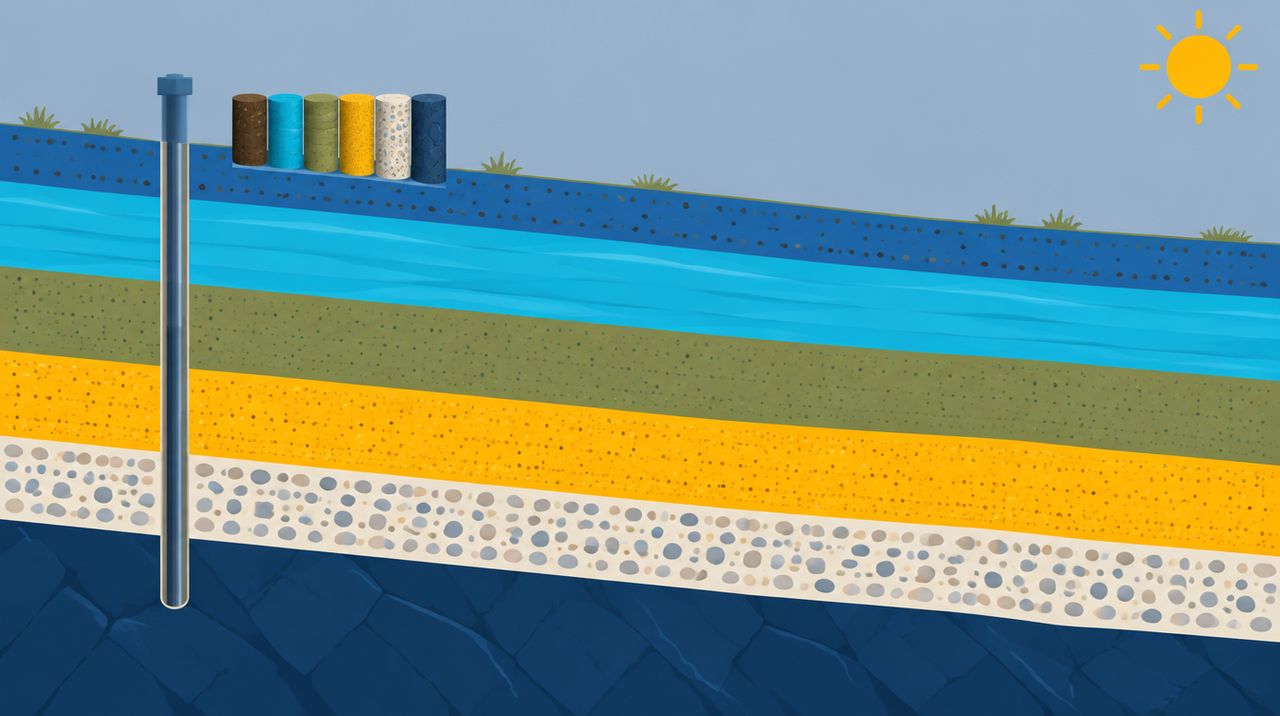
Beneath your feet
Under every structure, a soil to understand
Before building a road, a building or a bridge on it, the soil is described: its grain size, its plasticity, how it compacts, its bearing capacity. HeRMeS-XC processes these tests for you, in an interconnected formula.
The modules
The tests you already process
Particle size by sieving
Grading curve, characteristic diameters, uniformity and curvature coefficients.
Hydrometer analysis
Fines analysis by hydrometer, curve continued from the sieving.
Atterberg limits
Liquid limit, plastic limit and plasticity index.
Proctor test
Compaction curve, optimum water content and dry density.
CBR test
Bearing indices, result after soaking, swelling and dry densities.
PDF report
Cover page, paginated contents, test chapters and photo appendix.
The calculated values are compared with the workbooks of a partner geotechnical laboratory. You remain responsible for your measurements and for signing your report.
Beyond data processing
The new horizons HeRMeS-XC offers
Water gap
The difference between the soil's water content and its compaction optimum, visible in real time.
Density drop potential
The density the soil can lose depending on its moisture state, to anticipate rather than observe.
Holistic CBR Surface
An overview of soil behaviour, to manage the risks beneath your structures.
What is calculated
Curves draw themselves
Two examples: the grading curve and the Proctor optimum. These diagrams are illustrative: they do not show real results.
To go further: understanding the grading curve (D10, D30, D60, Cu and Cc) and the Proctor test and the optimum water content.
At the bench
A test starts with sieves, a measuring cylinder and a mould
A sieve retains grains larger than its mesh. Several sieves are stacked and the sample is poured through: the distribution of retained masses gives the grading curve. HeRMeS-XC takes your weighings, calculates and plots.
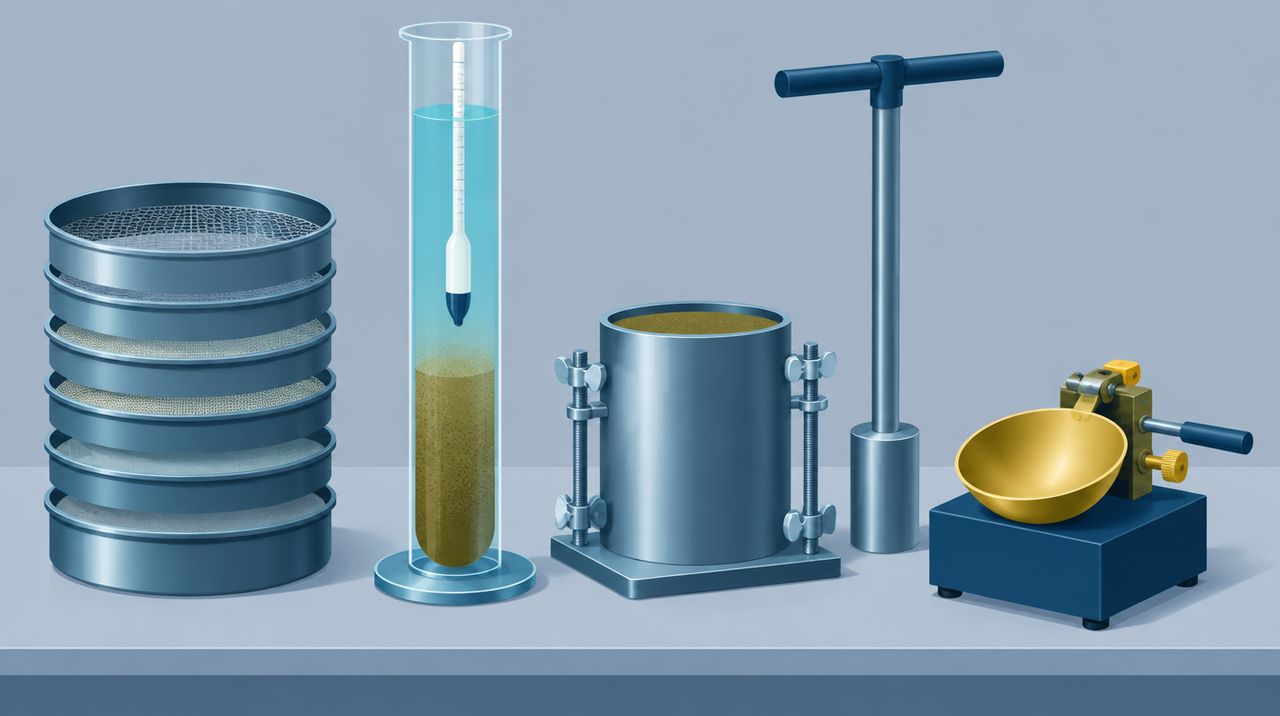
Illustrative sieving animation: each sieve retains grains larger than its mesh. The bars show the mass retained on each sieve.
In the field
For which structures?
Roads, platforms, buildings: the same tests, different questions.
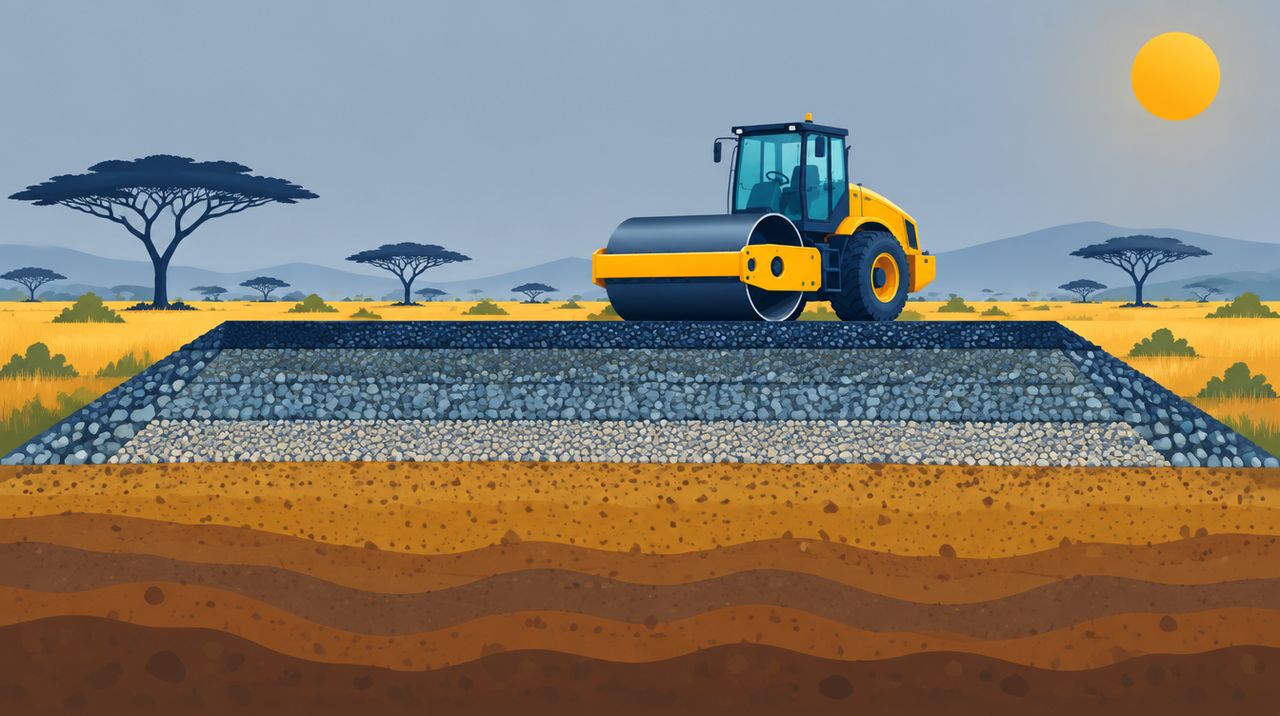
Roads, platforms and embankments
Proctor compaction sets the optimum water content. The CBR test measures the bearing capacity of the platform soil.
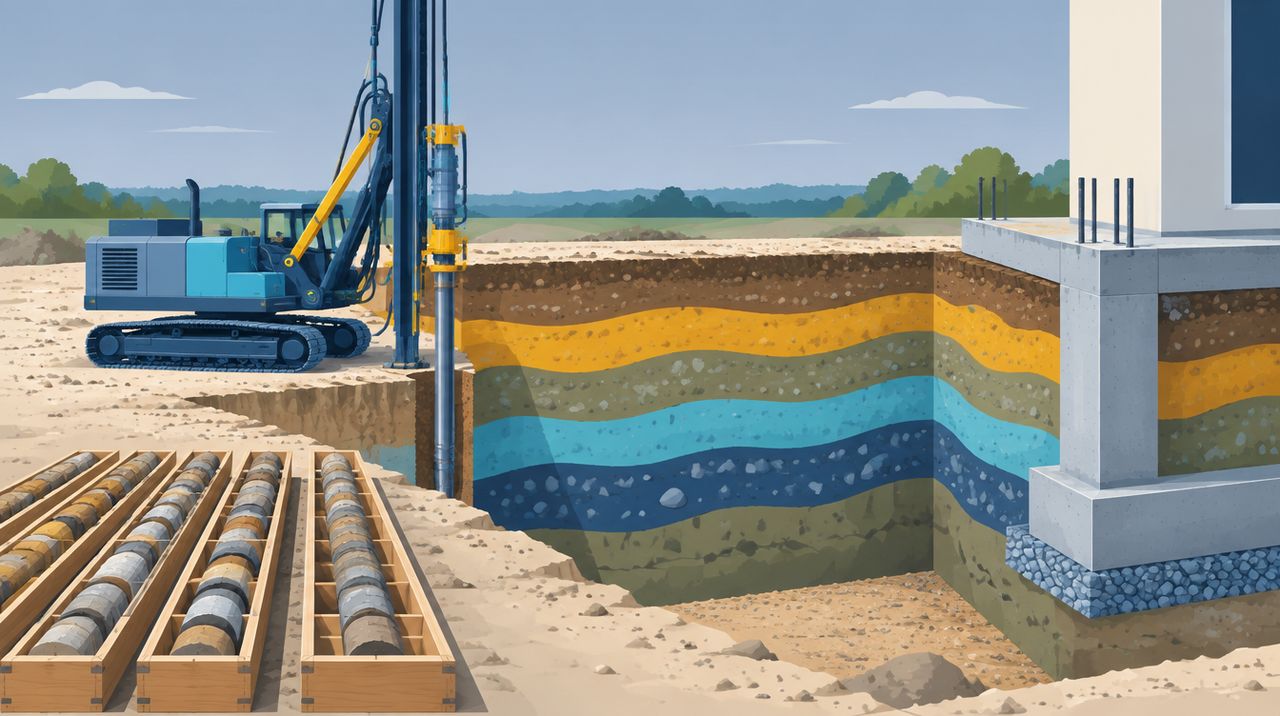
Foundations and boreholes
Boreholes bring up cores. Particle size, hydrometer analysis and Atterberg limits classify the soils encountered before the foundations are designed.
How it works
From measurement to report in four steps
Open a project
One project per site or per sample, kept separate from the others.
Enter your measurements
Once. No example value is pre-filled for you.
Validate your tests
Only validated tests enter the report.
Export the PDF
Fill in the cover page, then download the complete report.
Pricing
Packs for every profile
The prices below are those planned for the commercial launch, in CFA francs. During the beta, places are limited and payment is made online, by Wave, Orange Money or Free Money.
Individuals
Student
- 1 user
- 5 projects per month
- Common soil tests
- Report marked “educational use”
Consultant
- 1 user
- 15 projects per month
- Hydrometer analysis included
- Your logo on the report
One-off
- No commitment, not renewed
- 2 users
- 10 projects
- All tests
Organisations
School
- Up to 40 users
- All tests
- Report marked “educational use”
Essential
- 3 users
- 40 projects per month
- Common soil tests
Laboratory
- 10 users
- Unlimited projects
- All tests
Network
- Unlimited users
- Several sites
- All tests
Institution
- Tailor-made needs
- Contact us
Indicative prices, subject to change before launch. Individual packs are paid online; organisation offers are handled with us.
Beta
Try HeRMeS-XC on your own tests
We are opening HeRMeS-XC to a small number of geotechnical engineers and students to test the software on real tests and improve what needs improving.
1. A free week
By invitation: 7-day trial, 2 projects, no commitment and no payment.
2. A month at beta price
30 days for 2,000 FCFA, 6 projects, payable online by Wave, Orange Money or Free Money, while places last. Access as soon as you pay. Beta price: it does not preview the public prices.
3. Your feedback matters
We ask for a few short pieces of feedback. No testimonial is published without your written consent.
Places are limited. The terms of use and privacy policy (in French) for the beta are available to you, and you accept them before your account is opened.
Who is behind HeRMeS-XC
A tool designed with a geotechnical laboratory
The software was designed with a geotechnical laboratory, whose workbooks serve as the calculation reference.
Contact
Let's talk about your tests
To request a beta invitation, ask a question or be told when the packs open, write to us or call us.
- Phone
- +221 76 191 90 30
- contact@hermes-xp.org
In your message, state your profile (consultant, laboratory, student), the tests you carry out and the number of projects per month.